/ Editorial
Views: 535
When culture comes alive: Oporoza, Amaseikumor Festival and the urgency of preservation
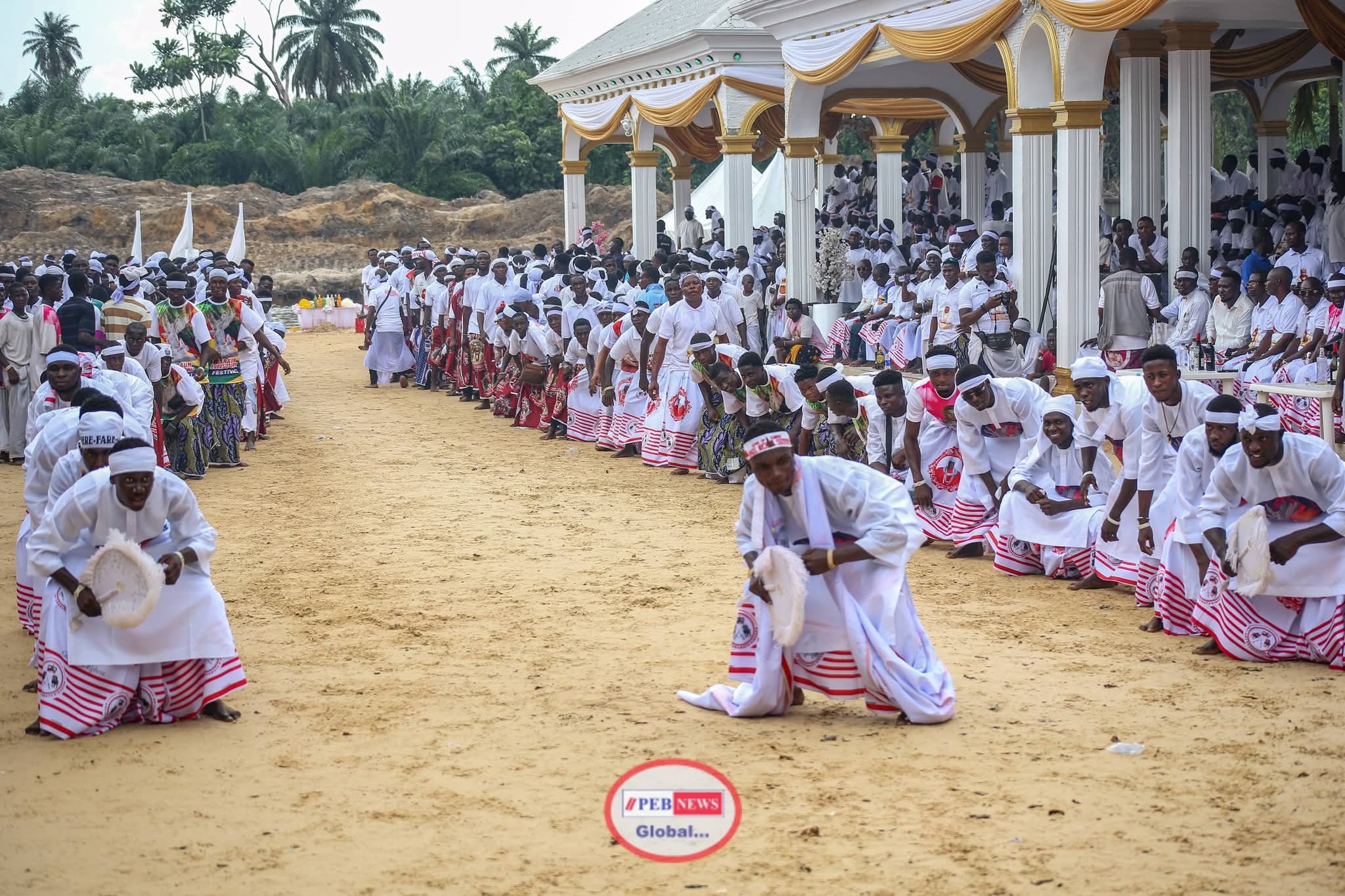
In an era where modern life continues to distance people from their roots, experiences like a recent visit to Oporoza in Gbaramatu Kingdom, particularly during the Amaseikumor Festival, serves as a powerful reminder of the enduring value of culture and community.
For many, traditional settings are becoming increasingly unfamiliar, reduced to stories, occasional visits, or cultural showcases. Yet what is often overlooked is the depth of connection, discipline, and identity embedded within these environments when they come alive through festivals and communal gatherings that actively sustain heritage.
The journey to Oporoza itself reflects this contrast between modern convenience and cultural immersion. Travelling by an open boat, unfamiliar to many accustomed to urban comfort, highlighted both physical and psychological distance from traditional life. That initial uncertainty, followed by gradual calm, mirrored a broader reality: reconnecting with culture may feel uncomfortable at first, but it is ultimately grounding.
At the heart of the experience is the people. In communities like Oporoza, hospitality is not a performance but a way of life. Doors remain open, and strangers are received with warmth. This stands in contrast to the increasing social detachment seen in many urban environments, where interactions are often transactional and guarded. Equally significant are the traditions of the Ijaw people, especially as expressed during the Amaseikumor Festival, where sacred spaces such as the temple are treated as holy ground governed by long-held beliefs around purity, respect, and cultural discipline.
The continuity of life during the festival further underscores this cultural depth. Activities stretch deep into the night, with live band performances continuing until the early hours. Even by 3 am, the community remains alive with music, dance, and celebration, reflecting a seamless flow that dissolves the boundary between day and night and reinforces culture as a lived, continuous experience rather than a scheduled event.
The presence of political leaders, visitors from different parts of the world, and entertainers such as Zlatan and Poco Lee further reflects the growing visibility of such cultural festivals. However, beyond visibility lies a deeper question of preservation and sustained engagement rather than seasonal attention driven by spectacle. Even cultural expressions like wearing attires, such as a wrapper, become symbolic acts of identity and connection to heritage that is increasingly at risk of fading.
Ultimately, places like Oporoza during the Amaseikumor Festival are more than cultural events; they are living archives of identity, memory, and tradition. They remind us of who we are, where we come from, and what stands to be lost if such traditions are not intentionally sustained. In a rapidly changing world, the question is no longer whether culture matters, but whether we are willing to remain connected to it.