/ News
Views: 95
Aondoakaa Warns Against States Independently Importing Arms for State Police
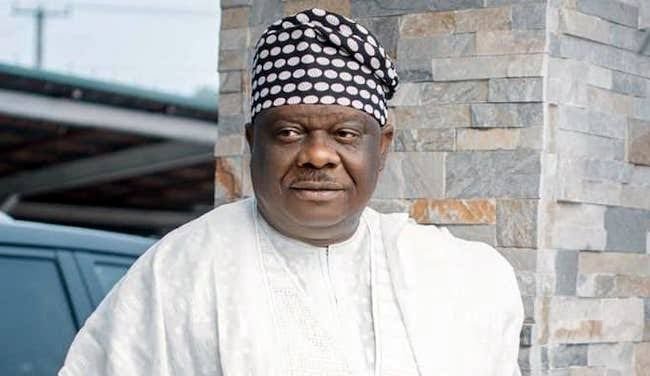
Former Attorney General of the Federation and Minister of Justice, Mike Aondoakaa, has cautioned against allowing states to independently procure and import arms for their proposed state police, warning that such a system could create confusion and weaken effective control of military and paramilitary equipment.
Aondoakaa made the submission on Monday during an interview on ARISE News, where he stressed the need for a clear legal framework to regulate the procurement, distribution and tracking of arms and other equipment for state police formations.
The former AGF said allowing all 36 states to independently source weapons from the international market could create serious security challenges.
“You cannot allow 36 states to go buying equipment directly from the international market to arm their policemen. There should be a level of control,” he said.
Aondoakaa suggested that the procurement of military and paramilitary equipment for state police should be centrally coordinated, possibly through the Office of the National Security Adviser (NSA), to ensure that authorities could track the type and quantity of arms supplied to each state.
He said such oversight would make it possible to determine the weapons supplied to individual states and prevent uncontrolled proliferation of arms.
“It will be a lot of confusion if the 36 states go to the market and import arms for their state police,” he added.
The former minister also identified recruitment as another critical area requiring safeguards to prevent political interference in the establishment and operation of state police.
According to him, legislation should prevent politicians from using state police recruitment to appoint individuals who are unqualified or unsuitable to serve as police officers.
“The key areas I would like to observe that must be taken care of [include] the issue of recruitment, to avoid politicians breaking the laws to become state police officers,” he said.
Aondoakaa maintained that the Federal Government and states must establish appropriate legislation and mechanisms to ensure that recruitment into state police is based on professionalism and competence.
Despite his concerns over possible abuses, the former AGF described the establishment of state police as a positive development, recalling that the proposal was raised during the 2009 constitutional reform process.
“State police is an idea that in 2009, during the first constitutional reforms, we brought the idea of state police because of the enormous challenges facing the federal police in policing the country. Unfortunately, we could not see it through,” he said.
He commended the present administration for advancing the proposal, describing it as “a very good thing.”
Aondoakaa, however, stressed that the success of state police would depend largely on effective regulation and clearly defined responsibilities between the Federal Government and the states.
He said concerns over possible abuses should not be used as a reason to abandon the initiative, noting that appropriate safeguards could be incorporated into the legal framework governing the new policing structure.
“We cannot say we will not move on because of the apprehensions of state police because of abuses. What we can certainly do is that, luckily, it is being placed on the concurrent list. And the framework, legal framework, can be effectively done by the Federal Government and the state,” he said.
He further called for mechanisms that would guarantee greater operational independence and professionalism in the management of state police at the local level.
“These are just a few observations, but I believe it’s a laudable project,” Aondoakaa added.