/ News
Views: 129
Reps Direct IGP to Produce PFIPC DG as Accountant-General Rejects TSA Request
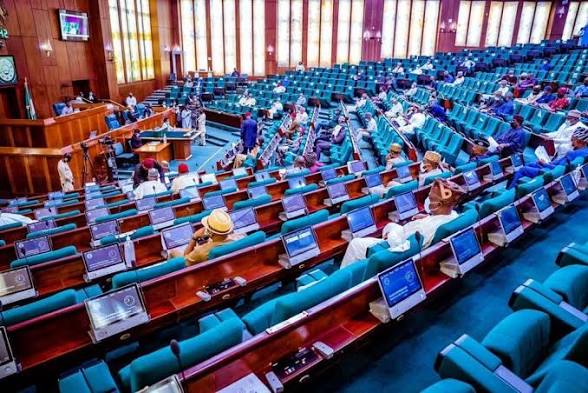
The House of Representatives Ad-hoc Committee investigating the activities of the controversial Presidential Foreign Intervention Promotion Council (PFIPC) has directed the Inspector-General of Police, Olatunji Disu, to produce the agency's self-acclaimed Director-General, Adeniyi Adeyemi, before the panel as its investigation continues.
The committee instructed the IGP to ensure Adeyemi appears before lawmakers on July 29, 2026, at noon, to answer questions relating to the establishment, operations and funding of the disputed agency.
The directive came on Monday as the Accountant-General of the Federation, Shamseldeen Ogunjimi, disclosed that his office rejected a request by the PFIPC to open a Treasury Single Account (TSA) because the agency failed to satisfy the required due diligence procedures.
Appearing before the committee, Ogunjimi explained that although the council applied to open a TSA account, the request was not approved because it did not meet established administrative requirements.
He maintained that the Office of the Accountant-General adhered strictly to due process before granting access to government financial platforms.
The PFIPC controversy erupted after its self-proclaimed Director-General, Adeniyi Adeyemi, alleged during a press conference that the Chief of Staff to the President, Femi Gbajabiamila demanded 48 per cent of the agency's proposed ₦27.3 billion take-off grant.
Adeyemi further alleged that the Chief of Staff received ₦400 million through a proxy and later requested an additional ₦200 million to facilitate presidential approvals.
However, Gbajabiamila strongly denied the allegations in a sworn statement, insisting that he had no personal, professional or official relationship with Adeyemi.
He also denied demanding or receiving money, abusing his office, interfering with law enforcement agencies or having any involvement in the alleged death of Babatunde Tanimola, whom Adeyemi claimed acted as an intermediary.
The Chief of Staff equally dismissed allegations linking him to an alleged assassination attempt on Adeyemi and interference in investigations by security agencies.
Following the allegations, President Bola Tinubu directed the Independent Corrupt Practices and Other Related Offences Commission (ICPC) to investigate the matter.
Meanwhile, Gbajabiamila has instituted a ₦15 billion defamation suit against Adeyemi before the High Court of the Federal Capital Territory, Abuja.
In the suit, he is seeking ₦10 billion in general damages, ₦5 billion in aggravated damages, ₦200 million as the cost of the action, and an order compelling Adeyemi to publish a retraction and apology in five national newspapers and across all social media platforms where the alleged defamatory statements were made.
The House of Representatives had earlier constituted a 12-member ad hoc committee, chaired by Yusuf Gagdi, to investigate the circumstances surrounding the establishment of the PFIPC and how it was included in the 2026 Appropriation Act.
The committee is also examining the alleged allocation of ₦1.3 billion to the agency in the national budget.
Earlier appearances before the committee by key government officials have raised further questions over the agency's legitimacy.
The Head of the Civil Service of the Federation, Esther Walson-Jack, told lawmakers that her office neither allocated office accommodation to the PFIPC nor deployed civil servants to the agency.
She clarified that although a request for staff deployment was received, it was merely acknowledged and no personnel were assigned.
Walson-Jack also dismissed claims that the agency occupied office space within the Federal Secretariat, stating categorically that her office did not allocate any such facility.
Similarly, the Director-General of the Budget Office, Tanimu Yakubu, informed the committee that none of the funds appropriated to the PFIPC had been released or spent.
According to him, although the National Assembly approved funding for the council, the statutory conditions required for the release and utilisation of the funds were never fulfilled.
“The conclusion is firm. Not one kobo of the personnel provision could lawfully have been drawn, and not one kobo was drawn. The overhead provision never matured into a lawful cash release. The capital provision never matured into procurement or expenditure. The conditions required for spending were not met and were not close to being met. There is therefore no personnel expenditure to recover. The money never moved because the controls held," Yakubu told the committee.
The committee has reiterated its commitment to conducting a thorough and impartial investigation into the controversy surrounding the PFIPC, including its legal status, funding process and allegations of financial misconduct.